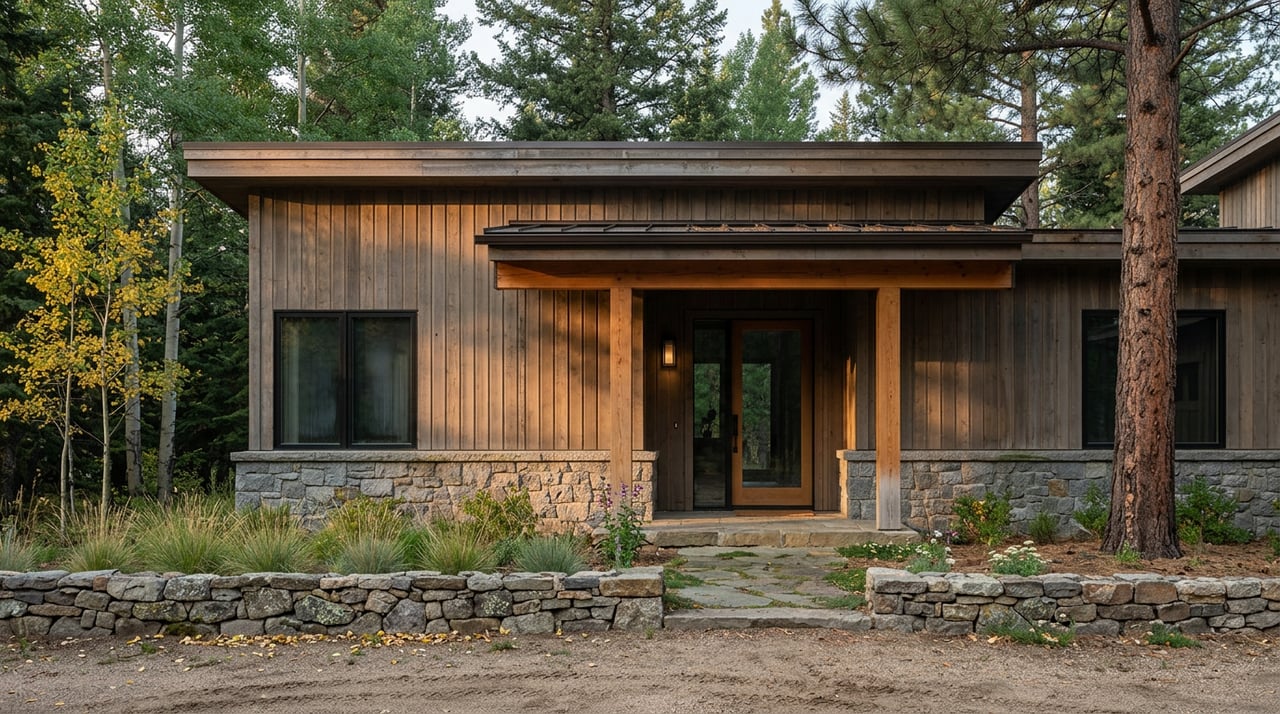
Pull up two Angel Fire listings priced within a few thousand dollars of each other. Same bedroom count, similar square footage, comparable views of the Moreno Valley. On paper they look like a coin flip. In practice, one of them can carry an extra $1,695 to $3,675 a year that never shows up on the listing sheet, stacked on top of whatever HOA fee the condo association already charges. The other one might carry nothing at all.
The difference has nothing to do with condition, age, or upgrades. It comes down to which side of an internal boundary line the property sits on, a line most out-of-state buyers never think to ask about until they're deep into a purchase agreement.
The Line You Can't See From the Listing Photos
Angel Fire Resort's designated membership area covers most of the village's 29 square miles. Any property inside that boundary, whether it's a vacant lot, a condo, or a finished home, is automatically enrolled as a Base Member of the Association of Angel Fire Property Owners, known locally as AAFPO. This isn't a fee you opt into for ski passes or golf privileges. It's attached to the deed itself, and it dates back to the 1995 bankruptcy reorganization of the original Angel Fire Ski Corporation, when the amenities structure that still governs the resort today was written into a court-approved plan.
Properties outside the resort boundary, including a number of ranches and horse properties on the edges of the valley, don't carry this obligation at all. That's the real fork in the road for buyers: not "which neighborhood feels nicer," but "which legal boundary does this parcel fall inside."
One Deed, Multiple Bills
Here's where it gets more expensive than most buyers expect. The AAFPO assessment doesn't replace a condo HOA fee. It stacks on top of it. Angel Fire Resort's own buyer FAQ is explicit that a condo purchaser is required to join both the condo association and AAFPO separately, meaning you're underwriting two governing bodies, not one.
It gets stranger if you own more than one parcel. A buyer who owns a lot, a condo, and a home within the resort boundary can be on the hook for three separate base memberships, one per property, regardless of whether all three sit side by side. And combining two adjoining lots into one doesn't automatically collapse the assessment down to a single payment. Some lots are deed-restricted to require the annual membership fee per lot even after a combination goes through, which is exactly the kind of detail a title search won't flag unless someone thinks to ask the resort's membership office directly.
For the 2025-2026 membership year, running May 2025 through April 2026, published dues sat at $1,695 for Base membership and $3,675 for Platinum, figures worth confirming directly with the resort membership office since dues are set annually. There's one notable exception worth knowing: properties owned by Angel Fire Resort itself within the Public Improvement District area carry no annual assessment at all, since those lots are already paid through the PID structure. It's a small carve-out, but it illustrates the larger point. The fee isn't tied to the home's value or its use. It's tied to which legal category the parcel falls into, and that category can vary lot by lot within the same subdivision.
The Village Bill and the Resort Bill Are Not the Same Bill
Buyers sometimes assume their property taxes already cover whatever "resort fee" shows up in a listing. They don't. The Village of Angel Fire is a separate governing body from Angel Fire Resort Operations, and each is funding a different set of obligations.
Earlier this year, at its January 13, 2026 council meeting, officials reviewed progress on a FEMA-eligible leak detection grant for the water system, approved a governance document and rent schedule for new workforce housing units, and authorized a road fund application tied to infrastructure repair. At that same meeting, officials said the village was in the final steps of an FAA approval process to take over full operational control of the local airport, with sign-off anticipated by spring. The long-dormant Liberty Square parcel downtown was also converted into a concert-ready venue with a stage and parking in 2025, part of a broader push the village has framed as workforce housing and infrastructure catch-up.
None of that spending touches the ski hill, the golf course, or Monte Verde Lake. Those amenities belong to the resort corporation, and they're funded through the AAFPO assessment, not your village tax bill. As of this writing, the village is also under a Stage 2 Blue Flag water restriction due to drought conditions and reduced groundwater levels, a reminder that water infrastructure here is a live, ongoing concern separate from resort amenity funding. Buyers comparing Angel Fire to other Northern New Mexico mountain markets should treat these as two distinct ledgers: what the village collects to run itself, and what the resort collects to run its amenities. A listing price tells you neither.
If You Plan to Rent It Out, Add a Third Layer
For buyers eyeing short-term rental income, there's a third cost stream layered on top of the first two. The Village of Angel Fire passed Resolution 2024-76 in December 2024, requiring a Short-Term Rental Permit for any property rented for stays under 30 nights. As of January 2026, the village has tightened enforcement, with late tax reporting now triggering formal penalties rather than informal reminders.
The permit fee itself is modest and scales with bathroom count. A 2.5-bath home, for example, runs roughly $190 annually under the posted fee schedule. But that number sits alongside a required fire inspection self-inspection form, a village business license (unless the property is under a licensed property management company that already holds one), and standard New Mexico Gross Receipts Tax collection on top of any lodgers' tax. None of it is unreasonable, but none of it is optional either, and it's easy to underestimate when you're focused on projected nightly rates rather than the paperwork stack underneath them.
What This Buyer's Market Actually Buys You
The good news for anyone weighing these stacked costs: 2025 left buyers with real leverage to sort through them before signing anything. Land in Angel Fire closed out the year sitting at roughly 21.1 months of inventory, a clearly buyer-leaning number in a market where sellers have less room to brush off due diligence questions. Cash purchases also climbed, from 52.1% of transactions in 2024 to 55.9% in 2025, while conventional loan use slipped from 43.2% to 40.0%, a pattern consistent with a second-home market where buyers are less rate-sensitive and more willing to wait for the right parcel rather than compete aggressively.
That patience cuts both ways. On the condo side specifically, buyers have grown noticeably more attentive to HOA health, reserve balances, and the possibility of special assessments before closing, exactly the kind of scrutiny that would have caught the AAFPO-plus-HOA stacking issue earlier in a hotter market. In a market where inventory sits this long, there's no reason not to ask the seller or listing agent to confirm in writing whether a property falls inside the resort membership boundary, whether any lot combination affects the assessment count, and whether the HOA's reserve fund has faced recent special assessments of its own.
A Few Questions Worth Asking Before You Write an Offer
Does the AAFPO fee apply even if I never use the ski hill or golf course? Yes. The assessment is tied to property ownership within the designated membership area, not to actual use of the amenities.
Can I find out whether a specific listing is inside or outside the boundary before making an offer? You can and should ask directly. The resort's own guidance tells buyers to confirm this with their realtor before moving forward, since the boundary isn't always obvious from a map or a listing description.
Does raw land carry the same obligation as a finished home? Generally yes. Base membership attaches to any property type within the boundary, including vacant lots, which is part of why buyers combining or splitting parcels need to check the specific deed restrictions rather than assume standard rules apply.
Are all condos automatically part of both associations? Angel Fire Resort's FAQ states that condo buyers are required to join both their condo association and AAFPO. It's worth getting this confirmed in writing for the specific complex, since fee structures and inclusions vary by building.
The sticker price on an Angel Fire listing was never the whole story, and in a market this spread out on price and this generous on time, there's no reason to find that out after closing. If you're comparing properties here and want the boundary lines, assessment history, and HOA reserve health worked out before you make an offer, Debbie Friday Jagers can walk through the specific parcel with you and get the real numbers in hand.