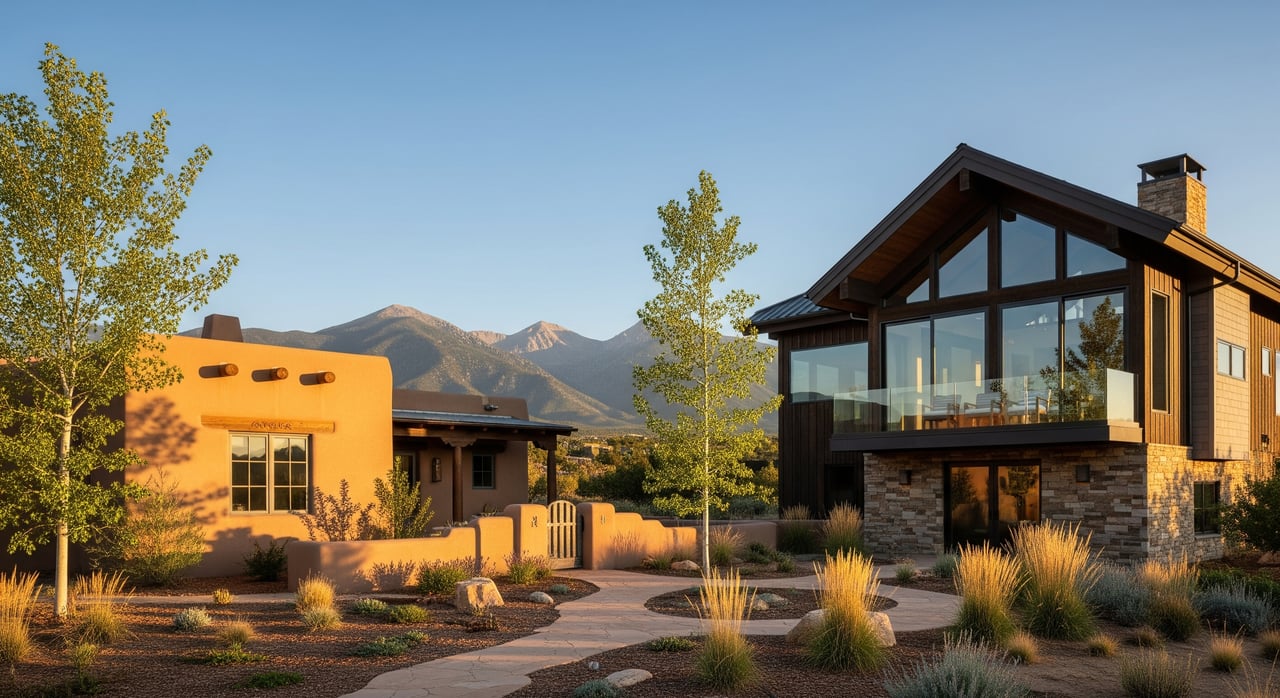
Are you deciding between a timeless adobe and a modern frame home in Taos? It’s a common question here, and it makes sense. Both styles fit the landscape, but they live differently, cost different amounts to maintain, and perform differently in our high-desert climate. In this guide, you’ll learn how each home type is built, how it handles Taos weather, what to expect for maintenance, and what to plan for with inspections, financing, and resale. Let’s dive in.
Taos climate and why it matters
Taos sits in high desert at roughly 7,000 feet. You get strong sun, cool nights, low humidity, and a real winter snow season. That means two big things for homes: moisture management and thermal performance.
- Day-night temperature swings reward homes that handle heat gain in the day and hold comfort at night.
- Snow loads and freeze-thaw cycles put pressure on roofs, foundations, and exterior finishes.
- Clear skies and sunshine make passive solar design and rooftop solar attractive for both adobe and frame homes.
Adobe basics
How adobe is built
Traditional adobe uses sun-dried earth mixed with straw or fiber to form thick walls. You’ll often see walls 12 to 24 inches thick, with wooden vigas and latillas supporting the roof. Exterior finishes are usually earthen or lime plaster designed to breathe. Older adobe may have limited engineered reinforcement, while newer adobe can be engineered with bond beams and other structural ties.
Strengths in Taos
- Thermal mass: Thick adobe walls absorb heat during the day and release it at night, which smooths out temperature swings common in Taos.
- Authenticity: Adobe’s historic and cultural roots are strong here. Many buyers value its regional character and craftsmanship.
- Fire resistance: Earthen walls are naturally fire resistant, which some insurers view positively.
Watch outs and maintenance
- Moisture is the enemy. Prolonged exposure to rain, splashback, or snowmelt can erode adobe and damage plaster. Freeze-thaw can worsen cracks if water gets in.
- Plaster cycles: Plan for periodic plaster touchups and re-coats, especially on weather-facing sides. Expect more frequent attention at corners and base courses.
- Wood details: Vigas and lintels can rot or draw pests if water intrudes. Keep penetrations well flashed and inspect regularly.
- Roof and drainage: Flat or low-slope roofs on adobe need proper snow-load engineering, working scuppers and drains, and solid flashing. Overhangs and drip lines help protect walls.
Wood-frame basics
How frame homes are built
Conventional wood-frame (stick-built) homes use dimensional lumber with sheathing and cavity insulation. Exterior cladding may be stucco, wood, or fiber cement. Utilities are easier to route in cavities, and remodeling is generally simpler and more predictable.
Strengths in Taos
- Insulation flexibility: Framed walls can reach high R-values with modern insulation and air sealing.
- Ease of modification: Running new utilities, adding windows, or reconfiguring layouts is often more straightforward.
- Contractor availability: It’s typically easier to find trades for standard framing, siding, and roof systems.
Watch outs and maintenance
- Water management: Cladding failures, poor flashing, or roof leaks can lead to rot and pest activity. Regular roof, siding, and gutter maintenance is key.
- Materials matter: Quality air sealing, insulation, and proper moisture barriers make the biggest difference in performance and durability.
Roofs that work in Taos
- Metal and pitched roofs: Common on both adobe and frame homes, metal sheds snow well and offers long service life when detailed correctly.
- Flat roofs on adobe: Historically used with earthen layers, many now use modern membranes. These roofs must be engineered for snow loads and need routine checks of drains, scuppers, and flashing.
- Tie-in details: If a pitched roof is added to adobe, proper flashing, overhangs, and parapet detailing are critical to keep water off the earthen walls.
Energy and everyday comfort
Thermal mass vs. insulation
Thick adobe walls shine in Taos’s diurnal climate. They help dampen daytime peaks and release warmth after sunset. That said, adobe’s R-value per inch is modest, so overnight heating needs can be higher without supplemental insulation. Wood-frame homes can reach high insulation values more easily, which helps with winter efficiency. In practice, many buyers prioritize a balanced approach: smart glazing, good air sealing, and an efficient HVAC system.
Practical upgrade ideas
- Air sealing and windows: Improving air tightness and upgrading to efficient windows deliver reliable comfort gains for both home types.
- Efficient HVAC: Heat pumps work well in our climate and pair nicely with both adobe and frame.
- Thoughtful insulation: For adobe, exterior continuous insulation can help but must be breathable and appropriate. Interior insulation can reduce thermal-mass benefits and requires careful detailing. For frame homes, cavity and exterior insulation are common strategies.
- Solar: Strong sun makes rooftop PV a solid option on either home type. Passive solar design pairs especially well with adobe’s mass.
Inspections that protect your purchase
For adobe homes
- Structural review: Bring in a structural engineer or preservation architect experienced with earthen construction. Ask about bond beams, reinforcement, and any bulging or settlement.
- Roofing check: Use a roofer familiar with flat adobe roofs and snow-load detailing. Confirm membrane condition, scuppers, and flashing.
- Moisture survey: Non-destructive moisture testing in walls and around vigas helps spot hidden issues.
- Plaster assessment: Get estimates from an adobe mason or earthen plaster specialist for maintenance and repairs.
For frame homes
- Standard home inspection: Focus on roof age and flashing, siding condition, drainage, and attic ventilation.
- Targeted follow-ups: If concerns arise, add foundation, mold, or pest inspections.
What to check during showings
- Exterior plaster or stucco condition, especially at corners and bases.
- Roof type and age, flashing at chimneys and parapets, and drainage away from walls.
- Signs of wood decay at vigas, lintels, or exposed timbers.
- Foundation type and any evidence of settlement or bulging.
- Any past repairs, materials used, and whether permits were pulled.
Financing, insurance, and appraisal
Set expectations early
Lenders and appraisers work with wood-frame homes every day. Adobe is familiar in Northern New Mexico but may still trigger extra steps. Some loan programs with minimum property standards may ask for engineering letters or specific condition items.
- Ask your lender: Do you have guidelines for adobe or earthen construction? Will you need an engineering report? Are FHA or VA products an option for this property type?
- Coordinate the appraisal: Make sure the appraiser understands the construction type and recent upgrades.
Insurance questions to ask
Insurance for adobe can vary by carrier and roof type. Some companies may request roof or snow-load upgrades. Others may note adobe’s fire resistance positively.
- Get quotes early in your due diligence period.
- Ask whether the roof, structure, or plaster condition affects coverage or price.
Resale and market fit
Where adobe shines
- Authenticity premium: Many buyers value traditional materials, visible vigas, and historic character. That can support strong pricing for well-maintained properties.
- Lifestyle alignment: Second-home buyers drawn to Southwestern style often prefer adobe’s look and feel.
Where frame homes excel
- Broad buyer pool: Simpler maintenance and easier financing can widen interest.
- Renovation plans: If you expect to reconfigure, add rooms, or run new utilities, framing makes life easier.
Potential challenges
- Maintenance perception: Adobe’s plaster cycles and moisture sensitivity can deter buyers who want low-touch ownership.
- Incompatible past repairs: Hard cement stucco over adobe or unpermitted changes can reduce value and complicate a sale.
Quick chooser: which is right for you?
- Choose adobe if you value authentic regional character, appreciate passive solar benefits, and are comfortable budgeting for plaster maintenance and specialized trades.
- Choose frame if you want higher insulation values out of the box, easier remodeling, and more predictable maintenance timelines.
- Either way, plan for a roof that fits Taos weather, sound drainage, and efficient HVAC.
Pre-offer checklist
- Request repair and maintenance history for plaster and roofs.
- Ask for permits and any engineering reports for structural or roof changes.
- Confirm whether the property lies in a historic district or has design guidelines.
- Get early lender feedback on adobe or unusual roof assemblies.
- Obtain insurance quotes during due diligence.
- Line up specialist inspections if adobe is involved.
Work with a local advisor
Choosing between adobe and frame in Taos is about lifestyle as much as construction. With the right inspections, smart upgrades, and clear expectations on financing and insurance, either path can be a great fit. If you want help comparing specific properties or assembling the right team of inspectors and contractors, connect with a Taos-native advisor who knows these homes inside and out.
Ready to explore homes and make a confident choice? Reach out to Debbie Friday Jagers for local guidance and concierge support.
FAQs
What makes adobe comfortable in Taos’s climate?
- Thick earthen walls act as thermal mass, absorbing daytime heat and releasing it at night, which smooths temperature swings common in the high desert.
How often does adobe plaster need maintenance?
- Frequency depends on exposure, but many homes see touchups and re-plastering on a cycle of several years, with more frequent care at corners and base courses.
Are flat roofs on adobe a problem in winter?
- They can perform well if engineered for snow loads and maintained with working drains, scuppers, and flashing; regular inspections are important.
Is financing an adobe home harder than a frame home?
- It can involve extra steps, such as engineering letters or specific condition items; engage your lender early to confirm requirements and timelines.
What inspections are critical for adobe homes?
- In addition to a general home inspection, plan for an adobe-experienced structural review, a roofer familiar with flat adobe roofs, and moisture testing around walls and timbers.
Do frame homes handle energy efficiency better than adobe?
- Frame walls can reach higher R-values more easily, while adobe offers strong thermal mass; both perform well with good air sealing, efficient HVAC, and thoughtful glazing.