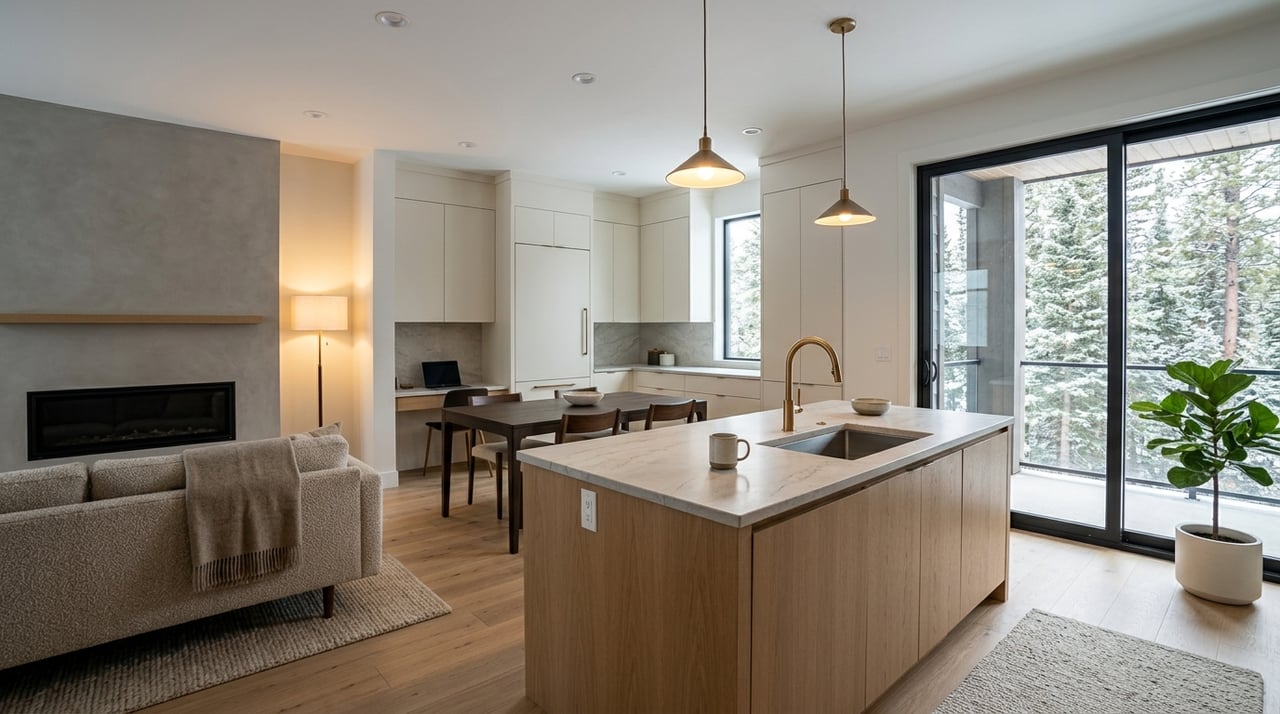
If you want a mountain getaway that you can also rent out part of the year, Angel Fire condos deserve a close look. Many buyers are trying to balance personal enjoyment, convenience, and income potential without taking on the full upkeep of a larger property. The good news is that Angel Fire’s condo market can support that mix, but the details matter more than many people expect. Let’s dive in.
Why Angel Fire condos appeal to both goals
Angel Fire works well for buyers who want a property they can enjoy themselves and potentially use as a rental at other times. The resort markets condo and home rentals for families and larger groups, with furnished one- to four-bedroom options, full kitchens, and access to skiing, dining, golf, and other outdoor activities. That setup makes condos easy to picture as both a personal retreat and a guest-ready property.
The four-season appeal is a big part of the story. Angel Fire Resort’s published summer season runs from May 15 to November 1, and its 2025-2026 winter season runs from December 12, 2025 to March 22, 2026. In winter, the resort offers more than 560 acres of terrain, and in warmer months visitors are drawn to biking, golf, Monte Verde Lake, scenic chairlift rides, hiking, tennis, pickleball, and disc golf.
That seasonal mix matters if you are thinking about both lifestyle and income. You may want ski access in winter and a cool-weather base in summer, while also having the option to rent during higher-demand recreation periods. It does not guarantee occupancy or returns, but it helps explain why many buyers see condos here as flexible assets.
Condo convenience can fit a lock-and-leave lifestyle
For many second-home buyers, convenience is just as important as location. A condo can be a strong fit when you want a place you can use, close up, and leave without managing every exterior detail yourself. That is one reason condos often appeal to remote owners and part-time residents.
In a condominium, common elements and some facilities are typically shared and managed through the association structure. That does not mean ownership is simple by default, but it can reduce the amount of hands-on exterior responsibility compared with owning a larger standalone property. If your priority is easy access to the resort and less day-to-day property oversight, a condo may align well with your goals.
Rental potential depends on more than location
A condo near the resort may look ideal on paper, but rental use depends on more than views or proximity. Before you assume a unit can generate income, you need to understand the layers of rules that affect how the property can be used. In Angel Fire, that includes both condo association documents and village short-term rental requirements.
If you are comparing properties, this is where due diligence becomes essential. Two condos in the same general area can have very different operating realities based on HOA rules, fees, reserves, parking limits, pet policies, or planned repairs. The purchase price is only one part of the decision.
HOA documents matter early
New Mexico condominium sales are expected to surface key documents, including the declaration, bylaws, rules or regulations, and a resale certificate or disclosure package. These materials can include monthly common expense assessments, special assessments, reserve information, operating budgets, insurance coverage, and current or expected fees tied to common elements or related facilities.
For a buyer focused on lifestyle and income, these documents often reveal the real story. They may show whether rentals are allowed, whether there are minimum stay rules, and whether guest use, pets, or parking are limited. They can also point to future costs, such as special assessments or larger capital projects, that may affect the economics of ownership.
Village short-term rental rules also apply
If you plan to rent a condo for stays under 30 nights, village requirements are a major part of the picture. The Village of Angel Fire requires a New Mexico gross receipts tax number, a Village business registration, and a Village short-term rental permit. A fire inspection is required before opening and then annually, and an evacuation plan must be submitted with that inspection process.
Even if you hire a management company, the compliance responsibility does not disappear. Village guidance says a management company may cover business licensing, but the owner still needs a short-term rental permit for each property. That means professional management can help with operations, but it does not remove the need for owner oversight.
Local operating rules can shape your plan
Short-term rental rules affect how a condo functions in real life, not just on a spreadsheet. Village paperwork sets guest capacity based on bathroom count, at 5 guests per full bathroom and 2 guests per half-bath. Street parking is not permitted, and owners are expected to keep guests aligned with local expectations around noise, trash, and recycling.
The permit is renewed annually, and the fee structure is based on the number of bathrooms. Monthly lodgers tax reports are due by the 25th of the following month, even when there were no stays. The village also states that gross taxable rent includes cleaning fees, pet fees, and other miscellaneous fees.
If a booking platform or manager collects some or all taxes, the village says owners must include monthly statements from those third parties. That can be manageable, but it does add an administrative layer you should understand before buying. A condo works best as an income property when the rules still leave room for the use pattern you want.
Seasonality affects both lifestyle and income
Angel Fire is seasonal, but not just in winter. Skiing and snow sports drive demand in colder months, while hiking, biking, golf, lake activities, chairlift rides, and events support travel in summer. Based on the resort calendar and visitor materials, it is reasonable to expect stronger demand during peak ski weeks and peak summer periods, with softer shoulder seasons in between.
That seasonality can work well if your personal-use plans match the market. Some owners prefer to use the condo during quieter weeks and leave peak times open for guests. Others want the best weeks for themselves and treat any rental income as a bonus rather than the main goal.
Neither approach is right for everyone. What matters is being honest about how you want to use the property and whether the HOA and village framework still supports that plan.
Managed rentals can simplify ownership
If you do not want to coordinate every stay yourself, a managed-rental model may be worth exploring. Angel Fire Resort Vacation Rentals says it offers privately owned homes and condominiums and connects guests to resort amenities such as lift tickets, golf, bike park access, and ziplining. It also provides professional housekeeping and commercial laundry services.
That kind of support may appeal if you live out of town or want a more hands-off setup. It can also help create a smoother guest experience. Still, you should weigh management structure, owner responsibilities, and local permit compliance carefully before deciding how involved you want to be.
Compare condo ownership to a single-family home
If you are trying to choose between a condo and a house in Angel Fire, the decision often comes down to priorities. A condo may be the better fit when you want a convenient base near resort activity, shared maintenance structures, and a simpler lock-and-leave setup. A single-family property may be more appealing when privacy, parking flexibility, and fewer association constraints matter more to you.
Here is a simple comparison:
| Consideration |
Condo |
Single-Family Home |
| Maintenance style |
Shared common elements and association-managed components |
More direct owner responsibility |
| Lock-and-leave ease |
Often stronger |
Varies by property |
| Resort convenience |
Often strong |
Varies by location |
| HOA restrictions |
Usually a bigger factor |
May be less of a factor |
| Parking and use flexibility |
Can be more limited |
Often broader |
This does not make one property type better than the other. It simply shows why condos tend to fit buyers who prioritize access, convenience, and part-time use.
Tax and planning questions to ask before closing
If you plan to mix personal use with rental use, tax planning should happen early. IRS guidance says that if a dwelling unit is used as a home and rented for 15 days or more, expenses must be divided between rental and personal use. If it is rented for fewer than 15 days during the year, the rental income generally is not reported on Schedule E.
At the state level, New Mexico says residents or people with New Mexico-source income who are otherwise required to file federally must file Form PIT-1. The state also says gross receipts tax is imposed on businesses, is commonly passed to the customer, and varies by location because it combines state, county, and municipal rates. That means the current Angel Fire location code and rate should be verified rather than assumed.
A tax professional can help you think through several practical questions, including:
- How personal-use days may affect deductions
- How depreciation and furnishings may be handled
- How monthly filings and platform statements are tracked
- How dues, repairs, or special assessments affect the overall math
What to review before you buy
Before closing on an Angel Fire condo, make time for a full review of the documents and operating costs that shape ownership. This step can help you avoid buying a property that looks flexible at first glance but feels restrictive later.
Focus on these items:
- Declaration
- Bylaws
- Rules and regulations
- Resale certificate or disclosure package
- Current budget
- Reserve balances
- Insurance coverage
- Current monthly assessments
- Any special assessments
- Expected common-element fees or capital projects
- Village short-term rental permit requirements
- Parking, occupancy, and guest-use limits
When those items line up with your goals, a condo can be a smart way to enjoy Angel Fire while keeping the door open to rental income.
If you are weighing condos in Angel Fire and want clear guidance on how a property fits your lifestyle, investment goals, and ownership responsibilities, working with a local advisor can save you time and help you ask better questions. For tailored insight on Northern New Mexico resort properties, connect with Debbie Friday Jagers.
FAQs
Can an Angel Fire condo be used for both personal vacations and rental income?
- Yes, many buyers use Angel Fire condos for part-time personal stays and rent them at other times, but the setup depends on the specific condo documents and local short-term rental rules.
What rules apply to short-term rentals in Angel Fire condos?
- For stays under 30 nights, the Village of Angel Fire requires a New Mexico gross receipts tax number, a Village business registration, a short-term rental permit, a fire inspection, and an evacuation plan.
What condo documents should you review before buying in Angel Fire?
- You should review the declaration, bylaws, rules or regulations, resale certificate or disclosure package, budget, reserve balances, insurance coverage, and any special assessments or planned capital projects.
Do Angel Fire condo HOAs allow all rentals?
- Not necessarily. Rental policies can vary by property, so you need to confirm whether rentals are allowed and whether there are rules about stay length, guests, pets, or parking.
How does seasonality affect Angel Fire condo income potential?
- Demand is generally tied to winter ski periods and summer recreation periods, with softer shoulder seasons likely in between based on the resort calendar and visitor programming.
Does hiring a property manager cover Angel Fire rental compliance?
- Not completely. A management company may handle some licensing tasks, but the owner still needs a short-term rental permit for each property according to village guidance.