If you love Santa Fe for its adobe character, walkable streets, and access to art, dining, and history, buying in a historic district can feel like the perfect fit. It can also come with more rules, more paperwork, and more planning than a typical home purchase. This guide will help you understand how Santa Fe’s historic districts work, what they can mean for renovations and timelines, and how to approach the process with confidence. Let’s dive in.
What Santa Fe Historic Districts Mean
Santa Fe’s local preservation system includes five historic districts: Downtown and Eastside, Historic Review District, Historic Transition District, Don Gaspar Area, and Westside-Guadalupe. According to the City of Santa Fe Historic Preservation page, these districts are part of a local review system that helps guide changes to properties while maintaining compatibility in style, form, color, height, proportion, texture, and materials.
A city housing-plan review states that these historic districts cover about 20% of the city, or roughly 6,000 buildings. For you as a buyer, that matters because district status can affect what improvements are allowed, what approvals are needed, and how much flexibility you may have after closing.
Before you commit to a purchase, it is smart to verify the parcel in the city’s GIS map and review the Historic Districts and Historic Buildings Status layers through the city’s historic preservation resources. Two homes on the same block may look similar but fall under different rules.
Why Buyers Are Drawn Here
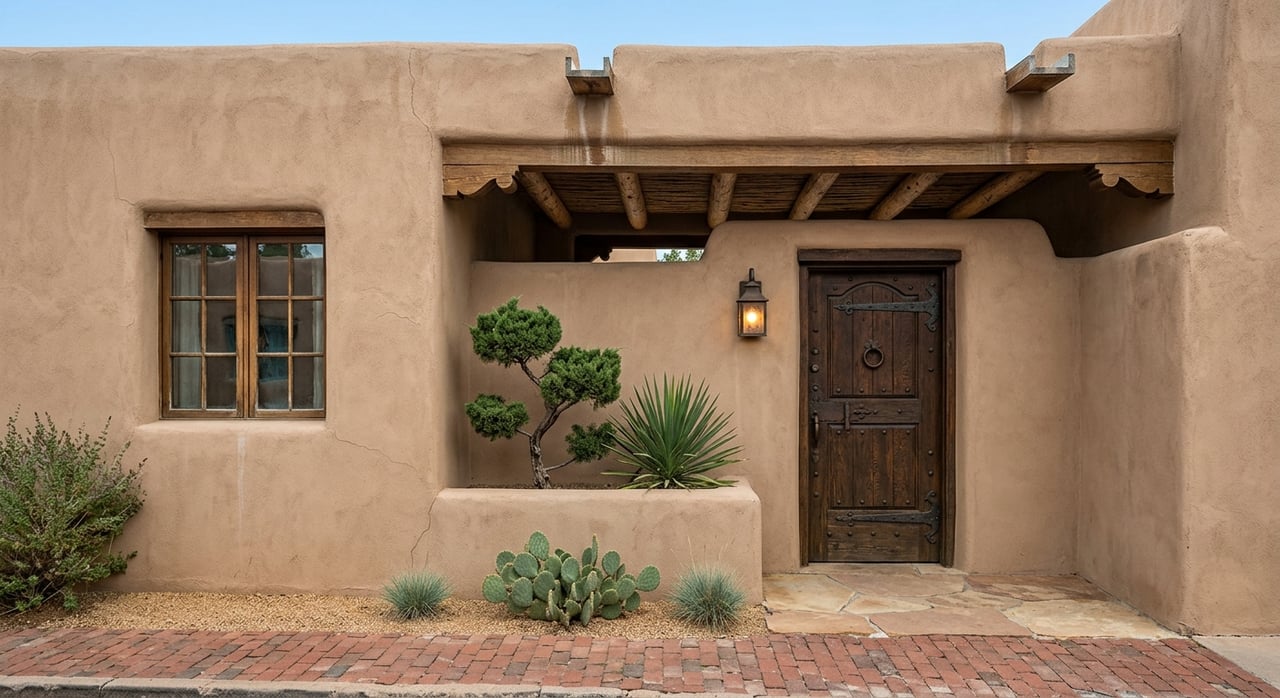
For many buyers, the tradeoff is simple: you are buying into some of Santa Fe’s most recognizable and culturally rich areas. Tourism Santa Fe’s architecture overview highlights the city’s Pueblo and Territorial traditions, including adobe forms, flat roofs, vigas, latillas, portales, pitched roofs, and divided-light windows.
These districts also place you close to places many buyers already associate with Santa Fe’s lifestyle. Plaza and Downtown offer access to restaurants, galleries, boutiques, bookstores, museums, hotels, the Santa Fe River, the Roundhouse, and the Georgia O’Keeffe Museum. Nearby, Canyon Road is known for its concentration of galleries, along with cafés and restaurants.
Walkability is another major benefit. The city’s walkability report classifies Downtown and Surrounding Neighborhoods as Very Walkable, including parts of the Downtown and Eastside Historic District and the Don Gaspar and Westside-Guadalupe historic neighborhoods. In the report’s terms, that means most or all daily trips can be made on foot.
What Historic Status Can Change
Buying in a historic district does not mean every project becomes a public hearing. Still, it does mean you should expect more review than you would outside these areas, especially for visible exterior work.
The city’s pre-application materials explain that the level of review depends in part on a property’s status: non-contributing, contributing, significant, or landmark. That distinction matters because it can shape how much oversight applies to future changes and how much design flexibility you have.
This is one reason due diligence matters so much before you buy. If you are considering updates after closing, you will want to know not just whether a property is inside a historic district, but also how the city classifies the structure itself.
How The Review Process Works
For proposed modifications in one of Santa Fe’s five historic districts, the city requires a Historic District Pre-Application Request. The current pre-application form says complete applications are emailed to the Historic Preservation Division, incomplete applications are returned without processing, and a case planner is assigned once the request is accepted.
The city also notes that some projects can be approved administratively, which is usually the fastest path. For maintenance, repair, or rooftop appurtenances, there is a separate administrative approval process that does not require a pre-application request and carries a $100 fee. A site visit may still be scheduled.
If a project needs Historic Districts Review Board review, you must first obtain a Historic Preliminary Zoning Review from Current Planning. The city’s Current Planning page says a complete PZR typically takes about 5 to 10 business days to process. After board action, staff prepares findings and a board action letter before the project moves into the building permit stage.
What Timelines Usually Look Like
Timing is one of the biggest surprises for buyers who are new to Santa Fe historic districts. Simple maintenance may move through the staff approval process much faster, while more complex or more visible projects can take longer because they involve multiple steps.
Board schedules play a real role. The city states that the HDRB meets on the second and fourth Tuesday of each month, while the Archaeological Review Committee meets on the first Thursday of the month through the city’s historic preservation page. In practical terms, projects that require board review are often more schedule-sensitive than basic repair work.
If you are buying a home with plans to renovate right away, build extra time into your expectations. That is especially important if your project depends on a closing date, contractor availability, or a seasonal move-in plan.
Which Projects Need More Attention
Some buyers assume the historic review process applies only to major remodels, but even smaller changes can trigger review. The city’s hearing and case materials show that applications may need a detailed project description, dimensions, materials, colors, finishes, window and door styles, yard walls and gates, along with site plans and photos through the HDRB hearings and cases page.
That should tell you something important: even modest exterior work may require more documentation than a standard permit package. The city is reviewing not only what you want to change, but also how those changes fit with the historic character of the property and surrounding area.
The city’s building permits page also lists work that still requires a construction permit, including roofing and re-roofing, window replacement, solar panels, re-stuccoing, driveway construction, and manufactured-home placement. At the same time, the city notes that most simple maintenance and repair in a historic district will not require a construction permit.
How Historic Rules Affect Renovation Costs
Historic district ownership often comes with a different cost structure than a comparable home outside the district. Some of that comes from fees, and some comes from design expectations, materials, and longer review timelines.
The city’s fee schedule includes a $75 pre-application onsite visit, $100 for maintenance-and-repair administrative approval, $100 for other administrative approval, and HDRB hearing fees equal to 0.05% of construction cost, with a $250 minimum and $2,000 maximum. There are also separate fees for exceptions, appeals, and required posters.
Santa Fe’s housing-plan review states that historic windows are expected to be repaired when possible or replicated without changing the opening size or shape. It also notes that historic regulations can add time and cost to repairs and can make some energy-efficiency upgrades harder, as outlined in the city’s housing-plan review document.
For you, that means renovation budgeting should be conservative. If you are buying with plans to replace windows, update stucco, alter roofing, or make visible exterior changes, it is wise to plan for both review costs and potentially longer lead times.
Questions To Ask Before You Buy
If you are serious about purchasing in a Santa Fe historic district, a few due diligence questions can help you avoid surprises later.
Check The Property Status
Ask whether the home is located in one of the five local historic districts and how the structure is classified. The city’s categories can affect the level of review for future work.
Clarify Your Renovation Goals
If you already know you want to update windows, roofing, stucco, or exterior details, ask early what approvals may be required. A home that works for your lifestyle today may not match your renovation plans tomorrow.
Review Timeline Expectations
If your plans involve immediate improvements after closing, compare your renovation schedule against the city’s review process and meeting calendar. This is especially important for second-home buyers or remote buyers trying to coordinate work from out of state.
Budget Beyond The Purchase Price
Include potential historic review fees, permit costs, design documentation, and longer project timelines in your planning. Historic homes can offer a lot of charm, but the path to updates is not always fast or inexpensive.
Is Buying In A Historic District Worth It?
For many buyers, the answer is yes. Santa Fe’s historic districts offer architectural identity, proximity to cultural destinations, and access to some of the city’s most walkable areas. They can provide a living experience that feels deeply connected to Santa Fe’s history and day-to-day rhythm.
The tradeoff is that ownership usually comes with more process. You may face added review steps, more detailed documentation, and less flexibility for certain exterior changes. If you go in with clear expectations, that tradeoff can feel much easier to manage.
If you are considering a home in Santa Fe’s historic districts, working with a local advisor who understands Northern New Mexico’s character, timing, and due diligence can make the process smoother. When you are ready to explore your options, connect with Debbie Friday Jagers for thoughtful, concierge-level guidance tailored to your goals.
FAQs
What is a historic district in Santa Fe?
- A historic district in Santa Fe is one of five locally designated areas where property changes are reviewed through the city’s historic preservation system to maintain compatibility with historic character.
How can I check if a Santa Fe home is in a historic district?
- You can verify the parcel using the City of Santa Fe GIS resources and review the Historic Districts and Historic Buildings Status layers through the city’s historic preservation page.
Do all Santa Fe historic district projects go to a public board?
- No. Some minor alterations and certain maintenance-and-repair projects can be approved administratively, while larger or more visible projects may require Historic Districts Review Board review.
How long does historic review take in Santa Fe?
- The timing depends on the type of project. Administrative approvals are usually faster, while projects needing zoning review and board action take longer because they must move through additional steps and scheduled hearings.
Do Santa Fe historic district homes cost more to renovate?
- They can. Historic review fees, added documentation, repair expectations, and compatibility requirements can increase both costs and project timelines compared with similar work outside a historic district.
Are Santa Fe historic districts walkable?
- Some are. The city’s walkability report classifies parts of the Downtown and Eastside Historic District and the Don Gaspar and Westside-Guadalupe areas as Very Walkable.