Thinking about making Taos your base for remote work or a part-time retreat? You are not alone. Taos blends high-desert mountain scenery, a rich arts scene, and year-round outdoor access with a slower pace that many professionals crave. This guide breaks down what daily life really looks like, from internet and utilities to seasons, healthcare, and local rules, so you can plan with confidence. Let’s dive in.
Why Taos appeals to remote living
Taos sits at roughly 6,900 to 7,000 feet in the mountains of northern New Mexico. The elevation gives you cooler temperatures, strong sun, and four distinct seasons. Winters bring snow and ski traffic, summers are warm with afternoon monsoon storms, and spring and fall are quieter shoulder seasons.
Peak visitor months are winter and summer. If you prefer fewer crowds, you may enjoy spring and fall most for focused work and easy dining out. Many remote workers choose in-town or near-town locations for convenience, then explore rural settings once they know their rhythms.
Internet and workspace options
Internet service in Taos is highly address specific. Some in-town streets have stronger cable or fiber options, while mesa and rural parcels may rely on DSL or satellite. Traditional satellite can have high latency, and DSL speeds can vary. Newer low Earth orbit services can meaningfully improve throughput and latency depending on line-of-sight and weather.
To verify connectivity at a specific address:
- Check the FCC Fixed Broadband Map for available providers and advertised speeds.
- Confirm wired service with provider address lookups and ask the seller or property manager for recent speed tests.
- Review the Starlink availability map for LEO coverage and check cellular carrier maps if you plan to hotspot.
- Plan backup, such as a second ISP, a hotspot, or LEO satellite, if a steady connection is mission critical.
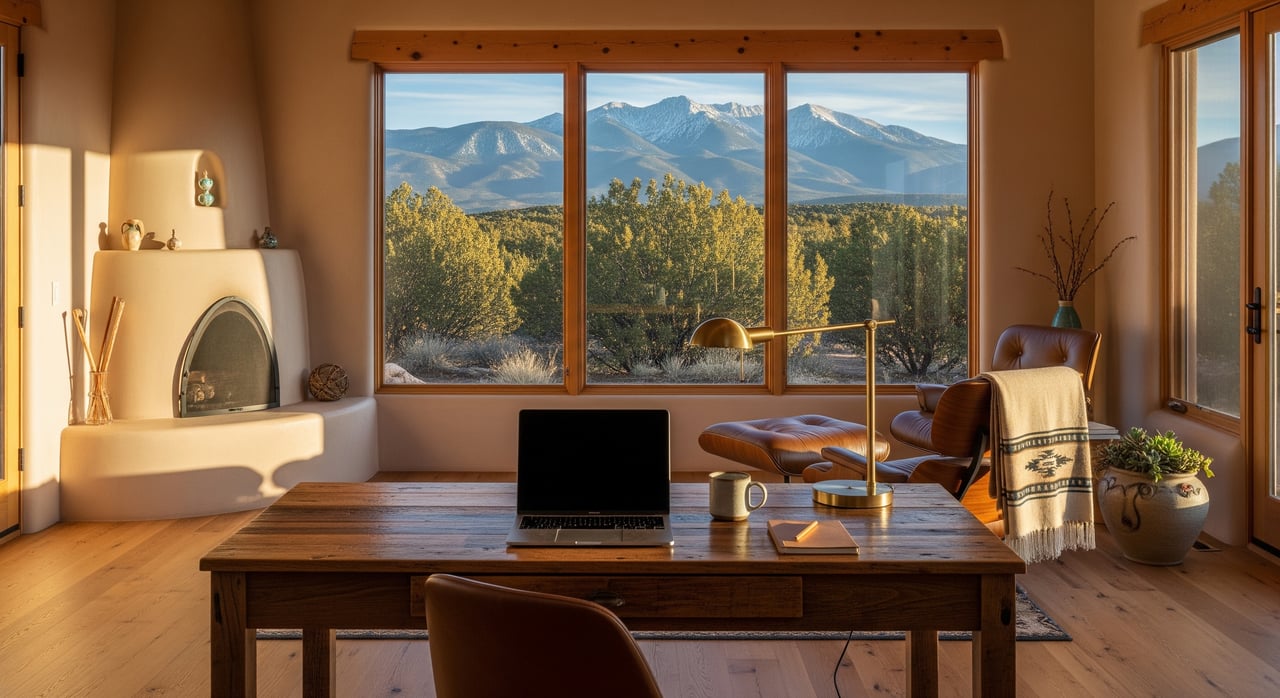
Co-working options exist, but they are limited compared with larger cities. Many remote professionals work from a home office and rotate through cafés or shared spaces when needed.
Utilities, heat, and services
Town properties often connect to municipal water and sewer. Many rural homes use wells and septic systems, which you should inspect as part of due diligence. Ask about water quality, well yield, and the age and service history of septic systems.
Heating systems vary. You will see propane, electric, wood stoves, and fuel oil. Natural gas is not universal outside town, so confirm fuel type and delivery logistics. Winter storms can cause occasional outages, so a generator or clear backup plan is helpful for both full-time and part-time living.
Trash and recycling pickup is common in town, while rural addresses may use transfer stations. Package delivery to town addresses is typical, though rural routes can have limitations. If you are part-time, a PO box can make mail and packages more reliable.
Insurance is another key check. Mountain desert climates bring wildfire risk in dry seasons and snow or ice in winter. Homes with wood heat or in higher-risk areas can see different premiums. Get localized quotes early and review wildfire, wind, and flood coverage.
Healthcare and emergency care
Taos has local hospital and clinic care for routine and urgent needs at Holy Cross Hospital. For many specialties and tertiary care, you will likely travel by car to Santa Fe or Albuquerque when needed. If you plan extended stays, establish a local primary care contact, line up pharmacy access, and consider telehealth as a supplement.
Getting here and around
Taos has a regional airport with limited commercial service and general aviation. Most travelers fly into Santa Fe or Albuquerque, then drive to Taos. Primary routes include NM‑68 and NM‑522.
Winter driving can be challenging when storms roll in, especially on mountain roads. Many residents and part-time owners keep a vehicle with all-wheel or four-wheel drive and winter-ready tires. Public transit is limited, and private or seasonal shuttle services change over time, so always verify current schedules before you fly.
Housing types and maintenance
You will find historic adobe homes near downtown Taos, ski-area condos and houses closer to Taos Ski Valley, rural ranch properties, mesa lots, and newer construction. Inventory can be tight, especially in the most desirable areas, and pricing varies widely by location and home features.
If you plan to be part-time, budget for seasonal care. Common tasks include winterizing plumbing, maintaining heating systems, arranging snow removal, scheduling property checks, and managing pests. Many owners hire local property managers for regular oversight, turnover, or rental support.
Short-term rentals and permits
Short-term rentals are an active policy area in both the town and the county. Rules can change, and you should not assume a property can be used as a vacation rental without checking. Expect registration and local occupancy tax requirements, plus operating guidelines that vary by jurisdiction.
Before you buy for rental use, review:
Taxes, residency, and costs
Property taxes are administered by the county assessor and can vary by classification. If you are considering primary residence versus second home status, request estimates from the assessor.
New Mexico has a state income tax. Part-time residents who earn New Mexico-sourced income or establish domicile may need to file. Short-term rentals usually involve state gross receipts tax and local lodgers’ tax. For clear guidance, consult a CPA familiar with New Mexico rules and confirm current percentages and procedures with the county and state.
Arts, food, and outdoors
Taos is known for its arts heritage, galleries, and museums, along with year-round cultural events. The outdoor access is a major draw. In winter, you have downhill skiing and snowboarding at Taos Ski Valley, plus Nordic and snowshoe options. Warmer months bring hiking, biking, climbing, rafting, and fishing on nearby rivers.
Public lands surround Taos. Explore the canyons and mesas of the Rio Grande del Norte National Monument, and head into the high country of the Carson National Forest for trail systems, including routes near Wheeler Peak. At altitude, plan for acclimation, changing conditions, and wildlife awareness.
Plan for seasons and weather
Winter brings snow and icy roads, especially on mountain approaches. Snow removal for private driveways is a recurring cost for second-home owners. Summer afternoons can see quick monsoon thunderstorms that change trail or road conditions.
If you want fewer crowds, target spring or fall for extended stays. If you like action and events, winter and summer offer more festivals and visitor energy. Either way, plan your gear, vehicle, and backup power with the season in mind.
Quick buyer checklist
- Internet: Verify address-level speeds on the FCC map and check the Starlink map. Ask for recent in-home speed tests.
- Utilities: Confirm water source, sewer or septic, heating fuel, propane delivery, and backup power.
- Winter access: Evaluate driveway grade, snow removal options, and vehicle setup.
- Insurance: Get quotes that reflect wildfire, wind, snow load, and any wood heat or off-grid systems.
- Healthcare: Identify local clinics and Holy Cross Hospital. Arrange telehealth if useful.
- STR rules: Confirm permits and taxes with the Town of Taos and Taos County, plus state requirements at NM Taxation and Revenue.
- Property care: Line up seasonal maintenance, property checks, and storage for vehicles or gear.
Work with a local guide
If Taos fits your lifestyle, you deserve guidance that is both practical and personal. As a Taos-native advisor with a concierge approach and Berkshire Hathaway HomeServices resources, I help you compare neighborhoods, verify address-level connectivity, coordinate virtual showings, and connect you with trusted local vendors for inspections, management, and maintenance. When you are ready to explore homes, second-home options, or rental strategies, reach out to Debbie Friday Jagers to start a thoughtful, low-stress plan.
FAQs
How reliable is internet in Taos for remote work?
What should I know about short-term rentals in Taos?
Is local healthcare sufficient for longer stays?
- For routine and urgent care, Taos has Holy Cross Hospital. Many specialties require travel to Santa Fe or Albuquerque, so plan for telehealth and prescriptions if you will be here often.
How challenging is winter driving and access?
- Snow and ice can make town and mountain roads slick. Many owners use all-wheel or four-wheel drive with winter-ready tires and arrange private snow removal for driveways.
What heating and utility setups are common in Taos homes?
- Expect a mix of propane, electric, wood stoves, and fuel oil, with municipal water and sewer in town and wells plus septic in many rural areas.
Are there co-working spaces and laptop-friendly cafés?
- Yes, but options are limited compared with larger cities. Many remote workers set up a robust home office and supplement with cafés or shared spaces as needed.
How does altitude affect daily life and outdoor plans?