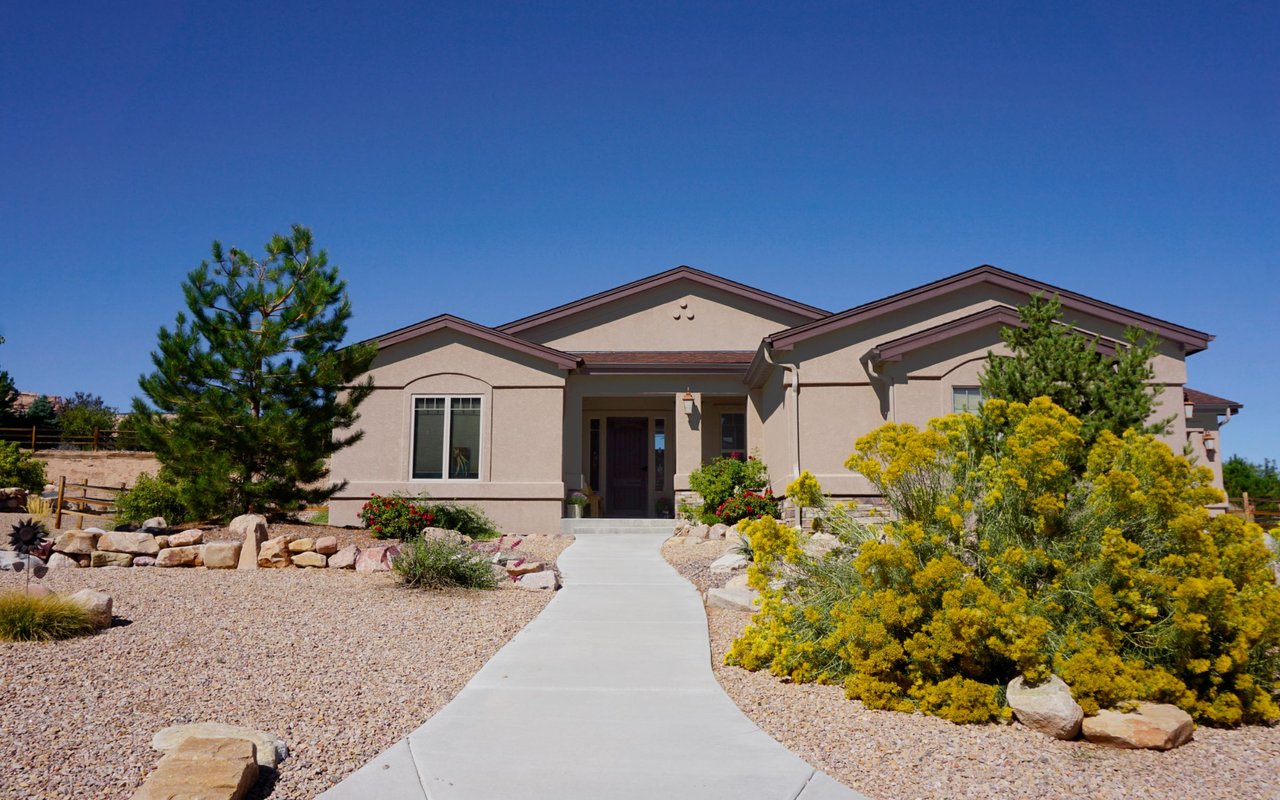
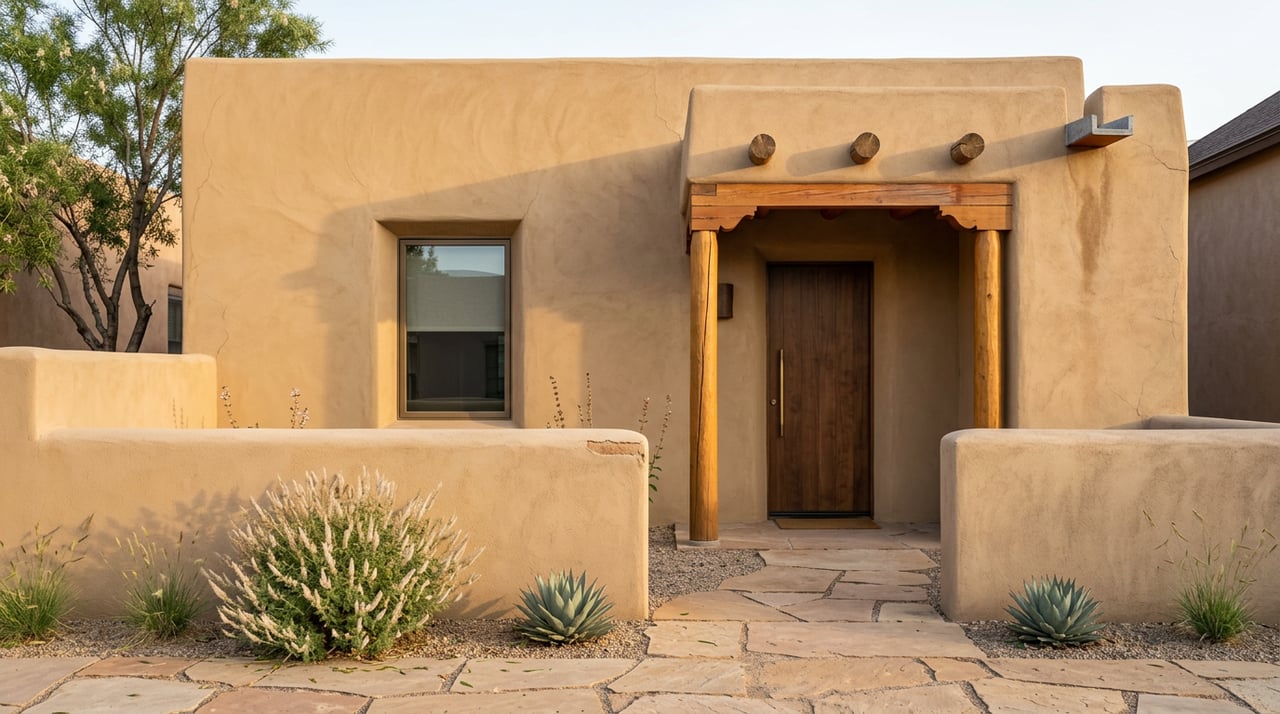
A buyer touring Santa Fe often sees the same math twice in one afternoon. Two adobe-style homes, similar square footage, similar bones, a half mile apart. One lists for $650,000. The other, just inside the boundary of the city's historic core, lists for well over a million. The natural assumption is that the second house has better finishes, a better lot, a better view. Sometimes it does. But the bigger reason for that gap sits in a filing cabinet at City Hall, not in the kitchen.
Santa Fe's Historic Districts Ordinance, first adopted in 1957 and revised in 1983, controls what can be built, altered, or demolished inside the city's five designated historic districts. That single piece of policy, more than any granite countertop, is what separates the citywide median from the Eastside premium. Understanding how it works matters more than the price tag itself if you are comparing neighborhoods and trying to figure out what you are actually buying.
The paperwork comes before the paint
Anyone who owns property inside one of Santa Fe's five historic districts inherits a process along with the walls. Exterior work, from a window swap to a new addition, needs approval either through a staff-level administrative sign-off for minor changes or a full hearing before the Historic Districts Review Board, a quasi-judicial panel of volunteer residents. That board meets only twice a month, on the second and fourth Tuesday, which means a homeowner who wants to change a door style or add a portal can be looking at weeks of calendar time before a shovel touches ground.
This is the friction that catches buyers off guard after closing, not before. A remodel that would take a contractor a week to price and schedule in most Santa Fe neighborhoods requires a design review case file, a hearing date, and sometimes a resubmission if the board asks for revisions. It is not a rejection of your taste. It is a system built to keep the district looking like itself, one application at a time.
What the ordinance was built to protect
The 1957 ordinance did not emerge from nowhere. Santa Fe's downtown had a genuine mix of architectural styles into the early twentieth century, including a wave of Victorian-era buildings, before local leaders moved in 1912 to favor Spanish Pueblo and Territorial Revival forms instead. The 1957 ordinance formalized that preference into law, with part of the intent being to use a unified regional style to help plant Santa Fe on the map as a tourist destination. Today's "Santa Fe style," the vigas, the rounded parapets, the earth-toned stucco, is the product of a zoning decision as much as a cultural one.
Not everyone in the architecture community sees the tradeoff as a clean win. Anthony Guida, an architect who serves on the Historic Districts Review Board and heads Friends of Architecture Santa Fe, has argued that tightening design rules over the years has reshaped the district's population as much as its skyline. He has described the ordinance's cumulative effect as causing:
"almost the wholesale gentrification" of certain parts of the city
That is a useful way to think about the premium. The rules do not just preserve a look. By limiting what can be built and how fast, they also limit supply in a way that a citywide median price cannot show you.
The gap, in numbers
Citywide, Santa Fe's housing market has been leaning toward buyers this year. In the three months ending May 2026, the median home sale price was $525,000, down close to 8 percent from the same period the year before, with homes typically taking 58 days to sell. That is a market with room to negotiate.
The Historic Eastside tells a different story. Market data reported in spring 2026 put the district's median sale price near $1.3 million, with median list prices closer to $2.35 million and a per-square-foot figure around $759, roughly double the citywide rate. Homes there also sit on the market a bit longer, typically around 63 days, which points to a thinner pool of both inventory and qualified buyers rather than weak demand.
|
Citywide (3 months ending May 2026) |
Historic Eastside (spring 2026) |
| Median sale price |
$525,000 |
approx. $1.3 million |
| Price per square foot |
$343 |
approx. $759 |
| Typical days on market |
58 |
approx. 63 |
Two markets, one city. The gap is not primarily about finish level. It is about how much buildable, alterable, market-ready inventory the ordinance allows to exist inside those district boundaries at any given time.
The maintenance bill that comes with the address
The premium does not end at closing. True adobe construction, the kind that qualifies a home as a contributing structure in the historic district, requires a small and specialized labor pool. Adobe masons, plaster finishers, and Saltillo tile setters work in a trade that does not scale easily, and their rates reflect it. Custom construction in Santa Fe typically runs $300 to $500 per square foot, with adobe or rammed earth builds and high-end finishes pushing past $600.
Moisture is the other line item buyers underestimate. Adobe walls fail from water intrusion, not age, and National Park Service preservation guidance is direct about this: a watertight roof and proper drainage are the primary defenses. Past repairs matter as much as original construction here. Cement stucco and hard cement patches, often applied as a quick fix, can trap moisture inside an adobe wall and accelerate the very deterioration they were meant to stop. A previous owner's shortcut becomes the new owner's inspection finding, and in a historic district, the fix has to go through design review too.
Why an ADU doesn't solve the math
Buyers sometimes look at a historic district price tag and think an accessory dwelling unit could offset the cost by adding rental income or space for family. It can, within limits. Detached ADUs in most Santa Fe residential zones are capped at 800 to 1,200 square feet depending on the zone, and inside a historic district, that new structure still has to match the exterior design language of the main house under the same ordinance that governs everything else on the lot. The ADU is not a workaround. It is another project that goes through the same calendar the rest of the property does.
So what is the premium actually buying
Set next to the citywide numbers, the Historic Eastside premium starts to look less like a luxury tax on charm and more like the price of admission to a fixed, slow-growing inventory pool. The ordinance was designed sixty-plus years ago to keep a specific look intact, and it has done that job well enough that the district's architecture is now inseparable from Santa Fe's identity. What it also did, whether intentionally or not, was cap how much of that look the market can ever produce. Buyers are not just paying for vigas and stucco. They are paying for scarcity that the city wrote into code.
A few questions worth asking before you tour
Does every older-looking home in Santa Fe fall under this ordinance?
No. The rules apply specifically inside the city's five officially designated historic districts, which cover the downtown core, the Eastside, and several surrounding neighborhoods. A home outside those boundaries can borrow the same architectural style without the same review process.
Can a buyer avoid the review board by building new instead of buying old?
Not inside district boundaries. New construction inside a historic district still has to match the district's design standards, so the review process applies whether you are restoring a hundred-year-old wall or pouring a new foundation.
Is the historic-district premium likely to shrink?
Nothing in the ordinance is changing, and the labor pool for traditional adobe work is not growing quickly either. Both point toward the gap holding rather than closing.
If you are weighing a historic district purchase against a home in one of Santa Fe's newer neighborhoods, or trying to figure out what a renovation budget really needs to include once design review enters the picture, that is exactly the kind of local detail worth talking through before you write an offer. Debbie Friday Jagers works both sides of that comparison across Taos and Northern New Mexico. Let's Connect — request a free home valuation or consultation to talk through what a specific address, historic or not, actually costs to own.