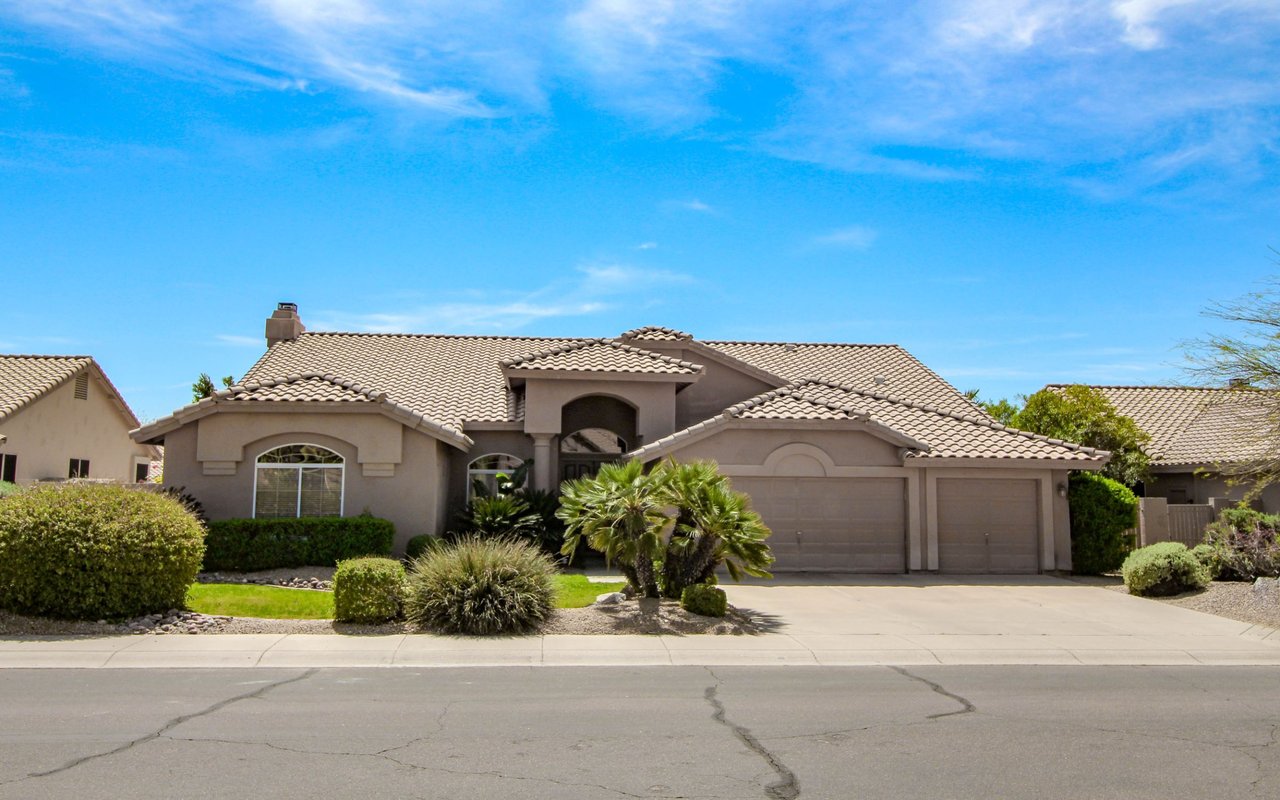
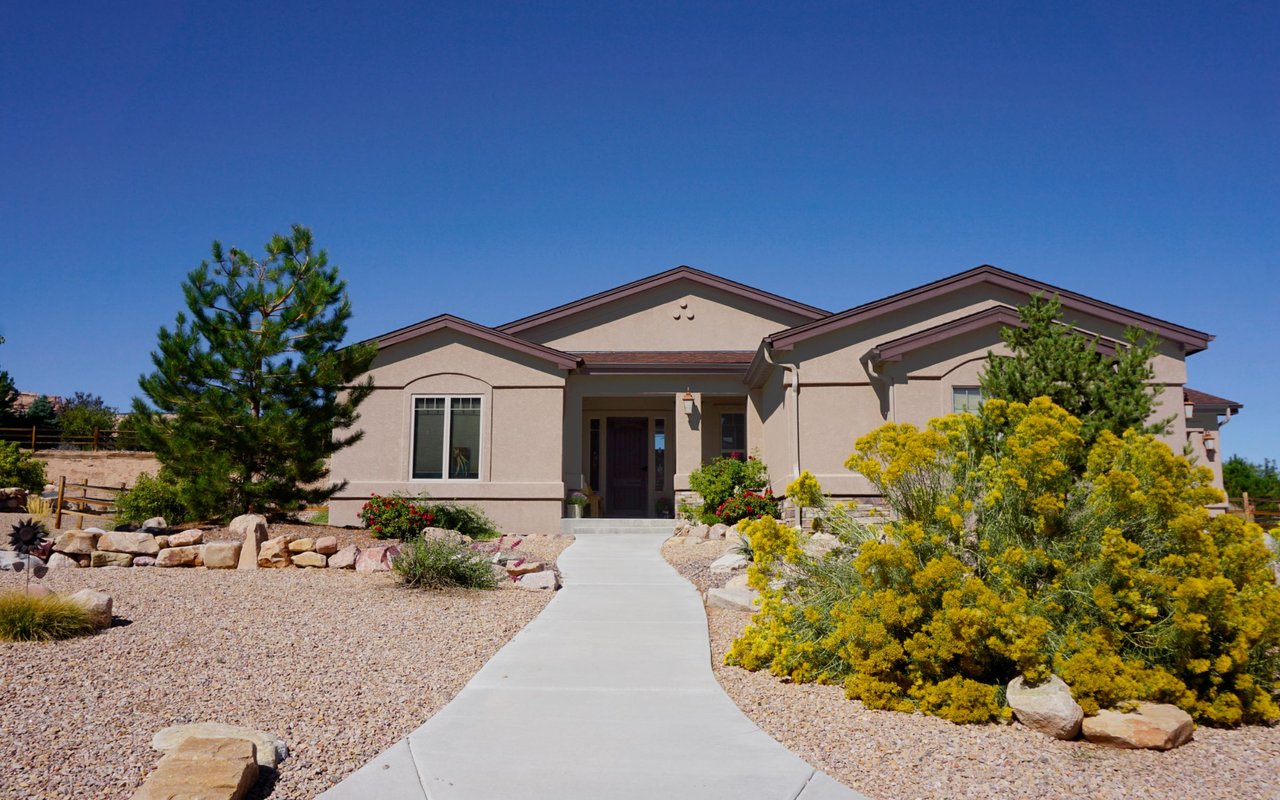
Look at the numbers side by side and the market appears to have made a mistake. Portal-reported MLS data placed the median sale price in Ranchos de Taos at roughly $724,600 as of April 2026, up more than a quarter over the prior year. The Town of Taos median for the three-month window ending in May 2026 sat at $599,000. That is a gap of well over $100,000 in favor of the area outside the municipal boundary, the one without a plaza to walk to, without a sidewalk grid, without the convenience that usually commands a premium in a small mountain town.
Buyers who have been comparing listings online tend to assume the opposite: that leaving the incorporated town should mean paying less, not more. The gap is real, but it is not measuring what most people think it measures. It is not a location premium. It is a composition effect, and understanding it is the difference between shopping Ranchos de Taos with realistic expectations and being surprised at the closing table by paperwork nobody warned you about.
The Paperwork That Surprises Buyers First
Before the pricing question, there is a more immediate one that shows up on nearly every Ranchos de Taos contract: what exactly is included with the water.
New Mexico treats domestic well rights as something that does not automatically transfer with the land. If a property has a well, the deed has to say so explicitly, naming the well and the water right as part of the conveyance. Silence in the deed is not a safe assumption that the right comes with the house. Every time ownership of a water right changes hands, that change has to be filed separately with the New Mexico Office of the State Engineer, the state agency that administers water law here. Title insurance and a standard title search typically do not cover water rights the way they cover the land itself, which means the conversation about what is and is not protected has to happen directly with the title company, not assumed.
Layered on top of well rights, a meaningful share of Ranchos de Taos properties carry acequia membership, meaning the land has a recorded right to irrigation water from one of the community ditches that run through the valley. That membership is not a utility hookup a new owner can ignore. It comes with assessments, maintenance obligations, and a spring cleaning known as la limpia that every parciante, or ditch member, is expected to show up for. Skipping those obligations can put the water right itself at risk.
A short list worth working through before writing an offer in Ranchos de Taos:
- Confirm in the deed itself whether any well and its water right are explicitly included, not implied.
- Ask the title company directly whether water rights are covered by the policy, since a standard search often stops short of them.
- If the property carries acequia membership, ask for delivery history and the assessment schedule, not just confirmation that water access exists.
- If the home is genuine adobe rather than stucco over frame, budget for an inspector with adobe-specific experience, since the material's main vulnerability is moisture intrusion that a conventional inspection is not built to catch.
None of this is unique to Ranchos de Taos within Taos County. But it shows up there more often than in the Town of Taos itself, for a reason that has everything to do with where the town limits actually sit.
Why the County Line Matters More Than the Map Suggests
Ranchos de Taos is not part of the incorporated Town of Taos. It sits in unincorporated Taos County, and that distinction is not just administrative trivia. Even inside Town of Taos limits, the zoning code ties density to utility type: lots connected to municipal or community water and wastewater are allowed more units per acre, while a lot running on a private well and state-approved septic system is capped at one dwelling per acre. Outside the town line entirely, in the county, that in-town density trade-off does not apply, and private wells with septic systems are simply the starting point for most parcels.
That difference is not an accident of geography that residents tolerate. It is actively defended. The Ranchos de Taos Neighborhood Association weighed in on Taos County's 2025 comprehensive plan update specifically to protect the area's designation as a Traditional Historic Community, a status that keeps the community from being annexed into the adjacent municipality. The association's comments also pushed back on a draft plan they felt underrepresented the acequia systems and agricultural land use that define the valley, right down to flagging that a working, century-old reservoir was left off the county's own maps.
For a buyer comparing a listing in town to one a few miles south in Ranchos, this is the part the price alone does not communicate. The Town of Taos listing likely comes with municipal water and sewer already connected. The Ranchos listing more likely comes with a private well, a septic system, and possibly acequia rights attached to the land, none of which are inherently worse, but all of which require different due diligence and carry different long-term maintenance responsibility.
The Slow Build of a Sewer System
Ranchos de Taos is not permanently locked out of municipal-style wastewater service. It has been getting there in pieces for two decades. The El Valle de los Ranchos Water and Sanitation District, whose motto translates to "without water there is no life," began construction on its community wastewater system in 2004 as an alternative to the septic systems that dominate the Taos Valley, and has extended sewer service in phases ever since, from the area near the Ranchos Post Office to sections east of Highway 68 near the plaza. In 2025, the district merged with the Llano Quemado Mutual Domestic Water Consumers Association, a smaller water system that has served the area since 1952, in a move meant to strengthen both systems' long-term water supply. In April 2026, the Taos County Commission approved the district's request to renew its property tax levy, the funding mechanism that keeps construction, staffing, and system maintenance moving forward.
What this means in practice is that sewer coverage in Ranchos de Taos is real, growing, and still incomplete. A buyer cannot assume a given parcel is connected just because it sits inside the district's boundary, and confirming hookup status, or the cost of extending a line, belongs on the same due diligence list as the well and water rights questions.
Acequia obligations run on an even longer timeline than the sewer buildout. The Talpa Reservoir, built in 1920 and still operating more than a century later, stores water from the Rio Chiquito under a state permit that allows it to be filled five times a year at eleven acre-feet each fill, feeding the Acequia Madre del Rio Chiquito and the Acequia del Monte del Rio Chiquito that serve parciantes in the valley. The Taos Valley Acequia Association, which represents member ditches stretching from Ranchos de Taos north to Arroyo Hondo, has spent decades negotiating how shared water gets allocated across the valley. None of this is background history for a buyer whose parcel carries one of these rights. It is the operating system the property depends on.
Membership in an acequia is not a utility hookup that gets forgotten after closing. It is a standing obligation to a system that has run this way for generations, and the value it adds to a property only holds as long as the new owner honors it.
What the Median Is Actually Measuring
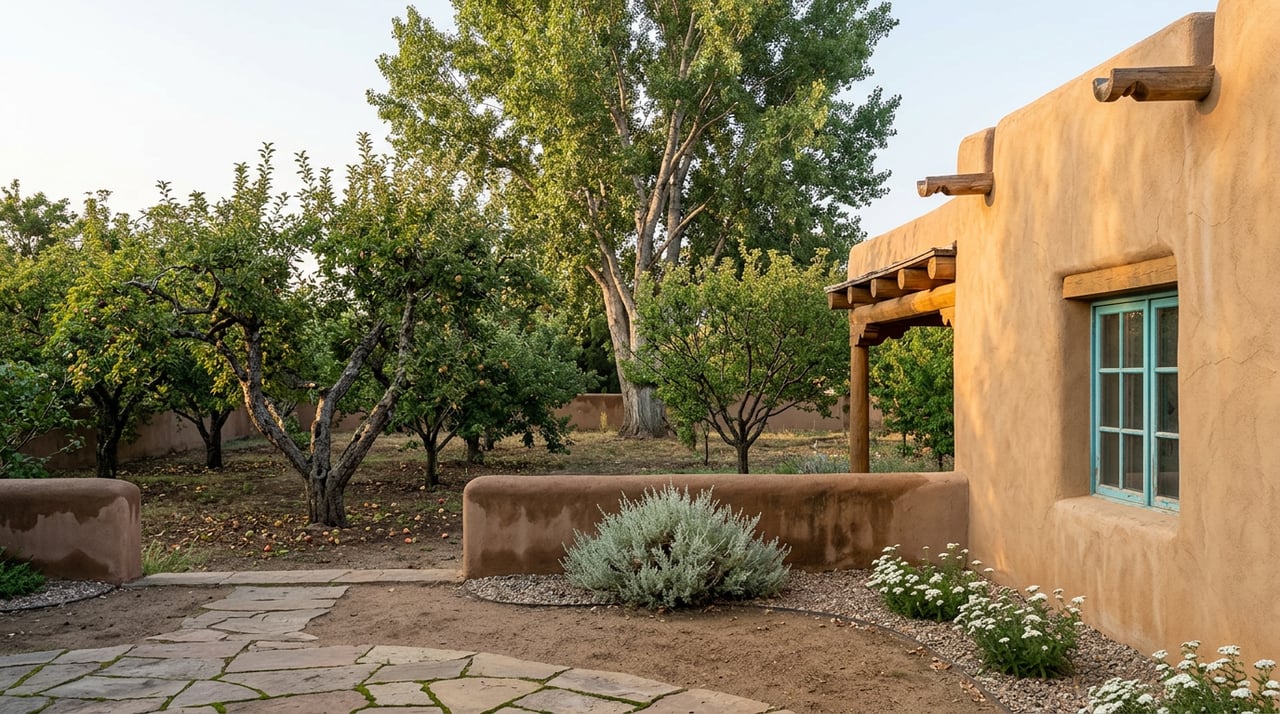
Return to the price gap with that context in place, and it stops looking like a mistake. What sells in Ranchos de Taos skews toward larger parcels: historic adobe compounds with acreage, orchards, and acequia water rights attached, the kind of property that simply does not exist inside the tighter, already-serviced lots of the Town of Taos. Those transactions pull the median up, even as smaller, unirrigated infill lots near the highway trade for considerably less. The area is not more expensive because it is more convenient. It is more expensive because a meaningful share of what changes hands there comes bundled with land, water rights, and agricultural infrastructure that the Town of Taos mostly does not have left to sell.
It is also worth treating any single year's percentage swing with caution. Other automated valuation trackers pegged the same period at price jumps well beyond what a market this size can plausibly sustain, the kind of number that shows up when a handful of large, water-righted sales dominate a thin monthly transaction count rather than reflecting a genuine shift in what typical buyers are paying. In a market where Taos County overall saw only 19 homes sold in April 2026, a single high-value adobe compound with acequia rights can move the median far more than it would in a larger city.
A Short FAQ for Buyers Comparing the Two
Does buying in Ranchos de Taos always mean a well and septic system?
Not always, since parts of the El Valle de los Ranchos district have connected to community sewer over the past two decades, but a private well and septic remain the default outside those completed phases, and confirming current hookup status for a specific parcel is essential before assuming otherwise.
If a listing mentions acequia rights, does that add value or add work?
Both. The right to irrigation water is genuinely valuable in a high desert valley, but it comes with assessments, maintenance duties, and community obligations that a new owner is expected to take on, not simply inherit passively.
Is the price gap between Ranchos de Taos and the Town of Taos likely to persist?
The underlying reasons for it, different jurisdiction, different infrastructure defaults, and a transaction mix weighted toward larger water-righted parcels, are structural rather than seasonal, so the gap is more likely to persist in some form than to close on its own.
Comparing a listing in town to one in Ranchos de Taos means comparing two different sets of infrastructure, obligations, and paperwork just a few highway miles apart. If you are trying to figure out what a specific property's water rights, septic status, or acequia membership actually mean for your purchase, Debbie Friday Jagers has spent a career in this valley sorting exactly that kind of detail out before it becomes a surprise at closing. Reach out for a conversation about what a given Ranchos de Taos property is really offering, or request a free home valuation to see where your own numbers land.